
Ontario Hospital Records Show Sharp Rise in Gambling Disorder Emergency Visits After Private Online Gambling Launch
Researchers examined 14 years of hospital records from Ontario and documented a substantial increase in emergency department visits tied to gambling disorders once the province permitted private operators into its online gambling market. The analysis compared observed visit rates against expected baselines and found the uptick concentrated among males in specific age groups while female rates showed no measurable shift.
Key Findings from the 14-Year Dataset
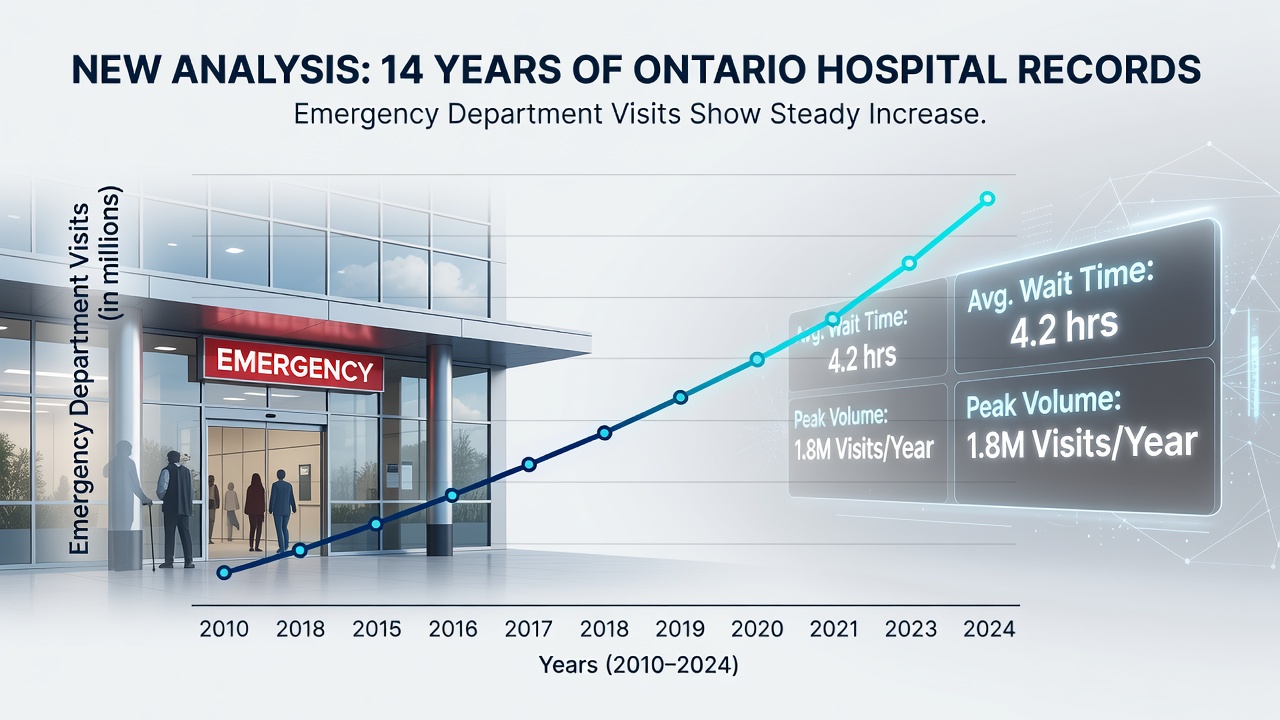
Data from the study covered emergency visits classified under gambling-related diagnoses and revealed that rates for males aged 10 to 29 climbed 154 percent above projected levels after the market opened to private operators. Men between 30 and 44 experienced a 116 percent rise over the same expected benchmarks, whereas female visit rates stayed consistent with pre-expansion projections across all age categories. Observers note that the timing of the increase aligns directly with the regulatory change that introduced private online platforms, and the pattern appears in aggregated provincial health statistics rather than isolated incidents.
The authors tracked monthly and yearly trends to isolate the effect from broader seasonal or economic factors. Their methodology relied on historical averages drawn from the earlier portion of the 14-year window, which allowed them to calculate deviation percentages once private operators began offering regulated online options. Figures indicate the deviation persisted rather than appearing as a short-term spike, and the authors presented the results as a measurable signal for jurisdictions weighing similar policy shifts.
Context of Ontario's Regulatory Shift
Ontario expanded its online gambling framework to include private operators several years ago, moving from a single-province operator model to one that licenses multiple commercial entities. The change created a regulated marketplace where previously unregulated offshore sites competed with newly authorized platforms. Hospital data reviewed in the analysis begins well before this transition and continues through subsequent years, providing a longitudinal view of how emergency service utilization evolved alongside the policy adjustment.
Public health records used in the study include standardized diagnostic codes that flag gambling disorder as a contributing factor. Researchers aggregated these codes across emergency departments province-wide, then stratified results by age and sex to identify the groups driving the overall increase. The absence of a corresponding rise among females stands out in the breakdowns, and the authors flag this differential as an area warranting further examination in future datasets.
Implications Highlighted for Other Provinces
The research team presents the Ontario findings as relevant to provinces such as Alberta that have considered or are considering comparable expansions of private online operators. The analysis does not claim causation but documents a temporal association between the market opening and the measured increase in visits. Authors emphasize that other jurisdictions can use similar hospital record reviews to establish baseline expectations before implementing policy changes, then monitor deviations afterward.
Alberta officials and health agencies have received the report as one data point among several that inform ongoing discussions about online gambling regulation. The study authors recommend that provinces maintain consistent diagnostic coding practices and centralized data collection so that cross-jurisdictional comparisons remain feasible. They also note that emergency department data captures only the most acute presentations, meaning the full scope of gambling-related health impacts likely extends beyond the numbers reported here.
Methodology and Data Limitations
The 14-year span allowed researchers to apply time-series modeling that accounts for gradual demographic shifts and changes in healthcare utilization patterns unrelated to gambling. Expected levels were derived from pre-expansion trends, and post-expansion observations were tested against those baselines using standard statistical thresholds. The authors acknowledge that diagnostic coding practices can vary slightly across facilities, yet they maintain that the consistent upward deviation in specific male age bands exceeds what coding variability alone would produce.
Additional factors such as increased public awareness campaigns or changes in help-seeking behavior could influence visit rates, but the study design focused on relative change rather than absolute attribution. The concentration of the increase among younger and middle-aged males aligns with known demographic patterns in gambling participation, and the lack of change among females provides an internal control that strengthens the comparative analysis.
Conclusion
The Ontario hospital record review supplies one of the first large-scale, longitudinal looks at emergency service use following a shift to private online gambling operators. With male visit rates rising markedly above expected levels and female rates remaining stable, the data offers a clear quantitative signal that other provinces can reference when evaluating their own regulatory options. Continued monitoring of similar metrics will allow researchers and policymakers to track whether the observed pattern holds or shifts under different market conditions.