
Examining Certification Chains Linking Game Providers to Payment Flexibility Across Austria's Regulated Platforms
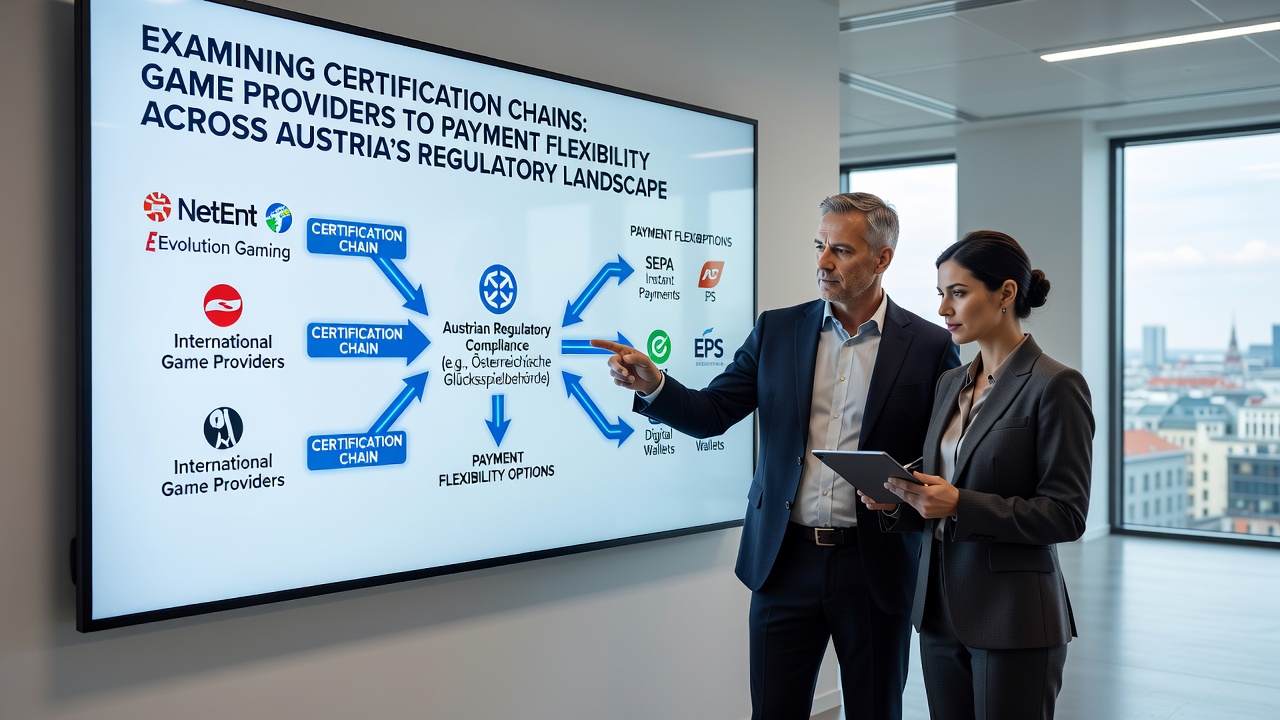
Austrian regulators maintain strict oversight of digital gaming through a network of certifications that tie game providers directly to approved payment systems, and this structure shapes how operators deliver flexible transaction options while meeting legal requirements. The process begins with independent testing laboratories that evaluate software for fairness and security before any integration with banking or e-wallet services can occur.
Certification Pathways and Their Components
Game providers submit titles to accredited labs for random number generator validation along with payout percentage checks, after which successful results feed into broader platform approvals that also cover payment gateway compatibility. Austrian law requires these steps under the Glücksspielgesetz framework, and each certification carries an expiration that forces periodic retesting to keep systems aligned with evolving technical standards.
Observers note that payment flexibility expands once a provider clears these hurdles because operators can then connect multiple deposit and withdrawal methods without triggering additional compliance reviews. Data from regulatory filings shows that platforms incorporating certified providers process transactions across a wider range of cards, bank transfers, and digital wallets while maintaining audit trails that authorities can access on demand.
Linking Game Software to Transaction Systems
The chain operates as a sequence where laboratory seals on game mechanics enable downstream connections to payment processors that have already received separate certification for encryption and anti-money laundering controls. When a new slot or table game enters the market, its certification documentation must reference compatible payment modules, which creates a documented link that regulators review during licensing renewals.
Researchers tracking these connections report that operators gain greater transaction variety after demonstrating that certified games interface cleanly with verified payment rails, and this linkage reduces the risk of system conflicts that could interrupt player balances or settlement times. In October 2026, updates to Austria's technical guidelines emphasized stronger API documentation requirements between game engines and payment systems, which further tightened teh certification chain.
Regulatory Oversight and Laboratory Standards
Austria's Ministry of Finance coordinates with European testing bodies to recognize certifications issued under common standards, yet each operator must still demonstrate local compliance through additional documentation that maps game certificates to specific payment providers. This dual-layer approach ensures that flexibility in deposits does not compromise the integrity of game outcomes or the traceability of funds.
Figures released by Austrian authorities indicate that platforms maintaining unbroken certification chains experience fewer interruptions during transaction monitoring audits, while those attempting to bypass the sequence face delays in approval for new payment methods. Industry reports from the European Gaming and Betting Association highlight similar patterns across member states where certification linkage directly influences the speed at which operators can introduce alternative funding options.
Impact on Platform Operations
Operators that map their game catalogs to certified payment partners report smoother integration of features such as instant withdrawals and multi-currency support, because the underlying certifications already address security protocols required by Austrian regulators. One study conducted by the University of Vienna's gambling research unit found that certified chains correlate with higher volumes of verified transactions per user account, although the data does not establish causation.
Payment flexibility therefore emerges as a downstream effect of the certification process rather than an independent feature, and regulators continue to refine the documentation standards that bind these elements together. Recent guidance issued in late 2026 reinforced the need for real-time logging of certification status across both game and payment layers to support faster dispute resolution.
Conclusion
The certification chains that connect game providers to payment flexibility in Austria form a structured system designed to preserve regulatory control while allowing operators room to expand transaction options. Data from official sources and academic reviews shows that adherence to these linked requirements supports consistent platform performance across licensed environments, and ongoing refinements to the process reflect adjustments in technology and compliance expectations through October 2026 and beyond.